
 EN
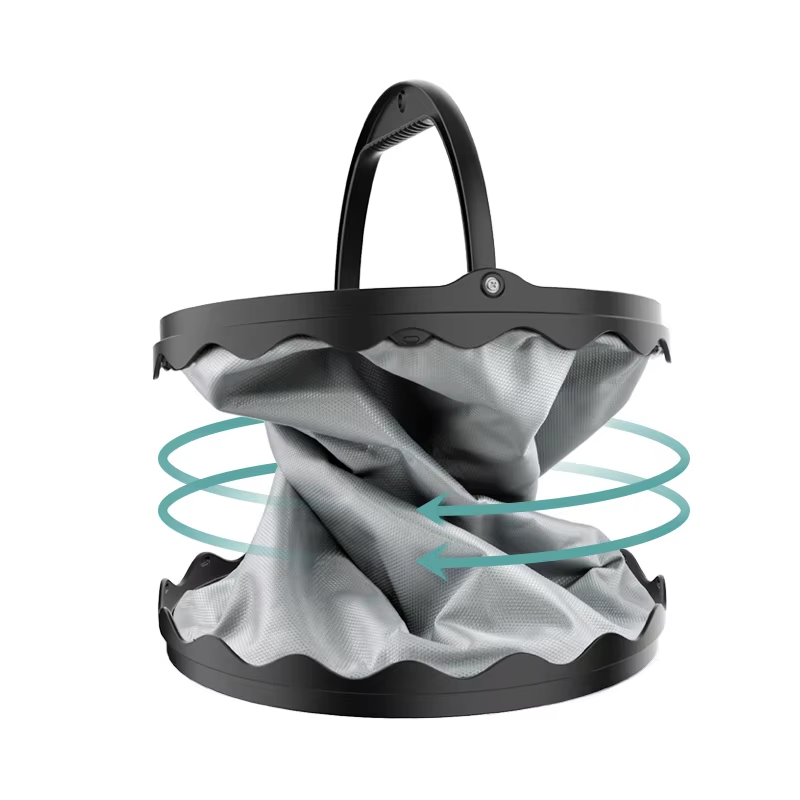
For outdoor gear sourcing managers, category buyers, and cross-border e-commerce brand owners, managing inventory footprint and logistics expenditure is just as critical as product performance. In the competitive outdoor, travel, and personal hygiene sectors, every cubic meter (CBM) in an ocean container or fulfillment center directly affects profitability. One product category undergoing a quiet logistics revolution is portable water storage. When evaluating collapsible water buckets vs traditional rigid buckets, global procurement teams must weigh shipping costs, warehouse utilization, compliance certifications, and customer satisfaction.
Transitioning from bulkier traditional rigid containers to an innovative collapsible water bucket or foldable water tank is no longer just a trend in consumer convenience—it is a strategic decision to protect net profit margins.
The Freight and Logistics Dilemma of Traditional Rigid Buckets
Traditional rigid plastic pails present a persistent logistics headache for importers and distributors. Because high-density polyethylene (HDPE) or standard rigid plastic buckets cannot be compressed, shipping them internationally effectively means paying ocean freight for empty air.
Even when nested together, rigid buckets occupy significant volumetric weight, inflating overall CBM calculations for Full Container Load (FCL) and Less than Container Load (LCL) shipments. Once goods reach overseas destinations, third-party logistics (3PL) warehousing fees and Amazon FBA fulfillment costs continue to accrue based on cubic dimensions.
When freight rates fluctuate or warehousing costs surge, stocking rigid buckets severely erodes retail margins. A product that appears inexpensive at ex-factory pricing becomes surprisingly costly once landed expense metrics are tallied.
Freight Cost Reduction and Storage Efficiency with a Collapsible Water Bucket
Replacing rigid inventory with a modern collapsible water bucket or foldable water tank directly resolves these freight inefficiencies. Designed using flexible food-grade polymers and reinforced folding joints, a collapsible water bucket flattens down to a fraction of its operational height.
Maximize Container Packing Density
A standard 10L or 15L collapsible water bucket reduces its total volume by 70% to 80% when collapsed. In practical shipping terms, an ocean container that previously fit only 3,000 stacked rigid pails can easily accommodate up to 10,000 to 12,000 collapsible units in compact master cartons. This drastic increase in unit density lowers the landed shipping cost per unit significantly, giving importers room to price competitively while expanding profit margins.
Optimize Warehouse Footprint and Last-Mile Fulfillment
At retail warehouses or Amazon FBA prep centers, compact packaging allows stocking substantially more sellable units per pallet rack. Furthermore, for e-commerce brands utilizing last-mile parcel delivery, shipping a thin, flat-packed foldable water tank falls into significantly lower parcel dimension tiers compared to dimensional weight penalties triggered by hollow, rigid plastic containers.
Sourcing Compliance: Essential Certifications for Global Markets
Cost savings mean little if imported products face customs holds or regulatory rejections. When sourcing a collapsible water bucket or foldable water tank for international distribution, B2B buyers must partner with manufacturers whose production standards meet stringent international safety and quality benchmarks.
Food-Contact and Chemical Safety Compliance
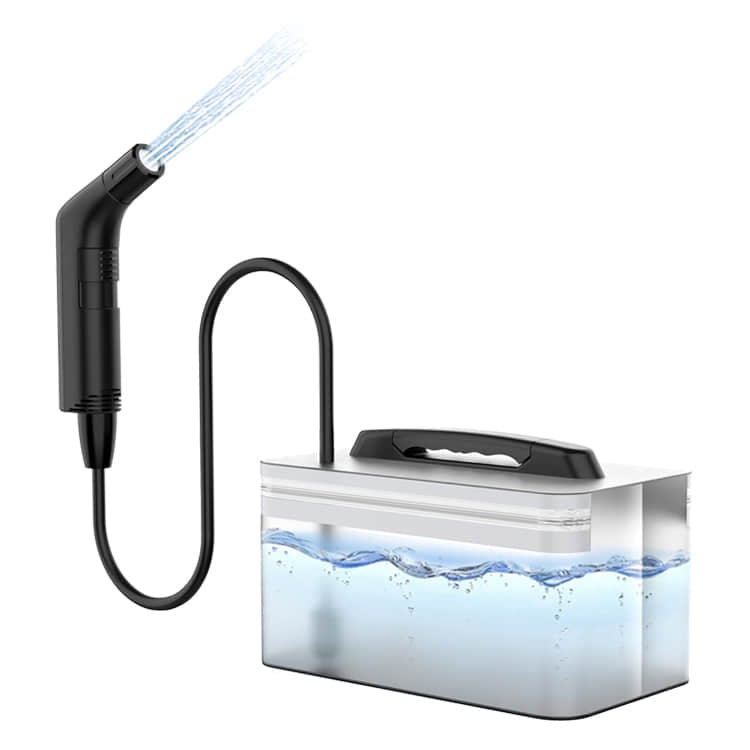
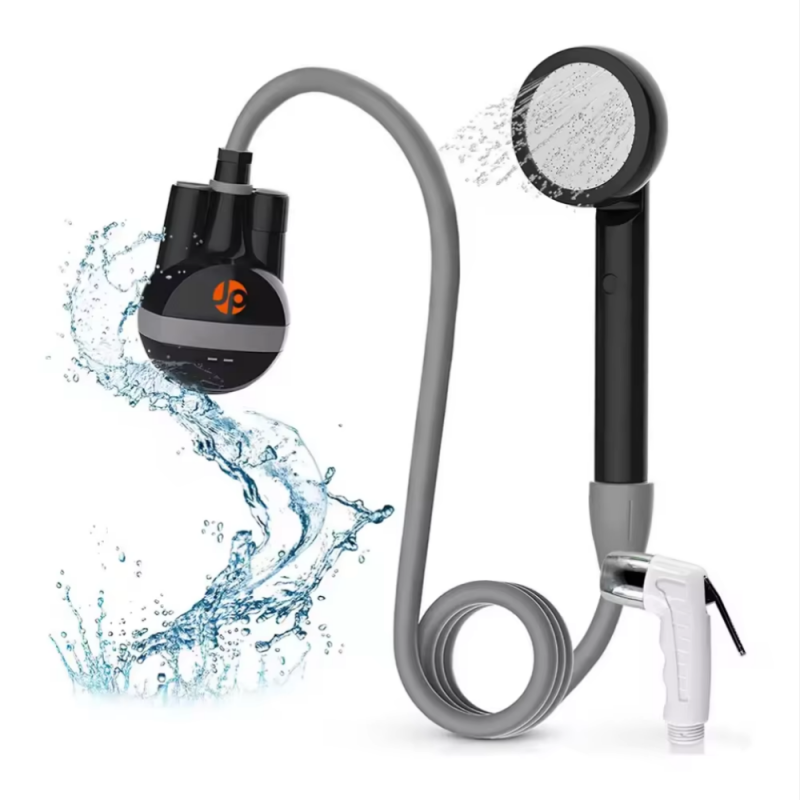
Because end-users frequently utilize a collapsible water bucket for drinking water storage, washing fruits, outdoor cooking, or personal hygiene (such as pairing with portable camping showers or Muslim bidet sprayers), material safety is paramount:
· FDA & LFGB Certification: Ensures the primary flexible materials (such as BPA-free TPU, EVA, or food-grade silicone) are tested for chemical leaching and heavy metals, meeting US and European food-contact regulations.
· RoHS & REACH Compliance: Confirms that plasticizers, synthetic rubbers, and structural rims are free from restricted hazardous substances and phthalates under European Union environmental mandates.
Quality Management and Factory Audits
A reputable OEM/ODM manufacturing partner should operate under an ISO 9001 certified quality management system. ISO 9001 certification ensures consistent raw material verification, standardized injection molding, rigorous leak testing, and dynamic load-bearing fatigue assessments for handles and seams. Sourcing from ISO-certified facilities safeguards brand reputation and keeps consumer return rates near zero.
Product Innovation: Overcoming Common Market Defects
Early iterations of flexible buckets on the market often suffered from structural weaknesses, including structural collapse under full water loads, chemical odors, and tearing along fold creases. Modern high-spec manufacturing has eliminated these common defect points:
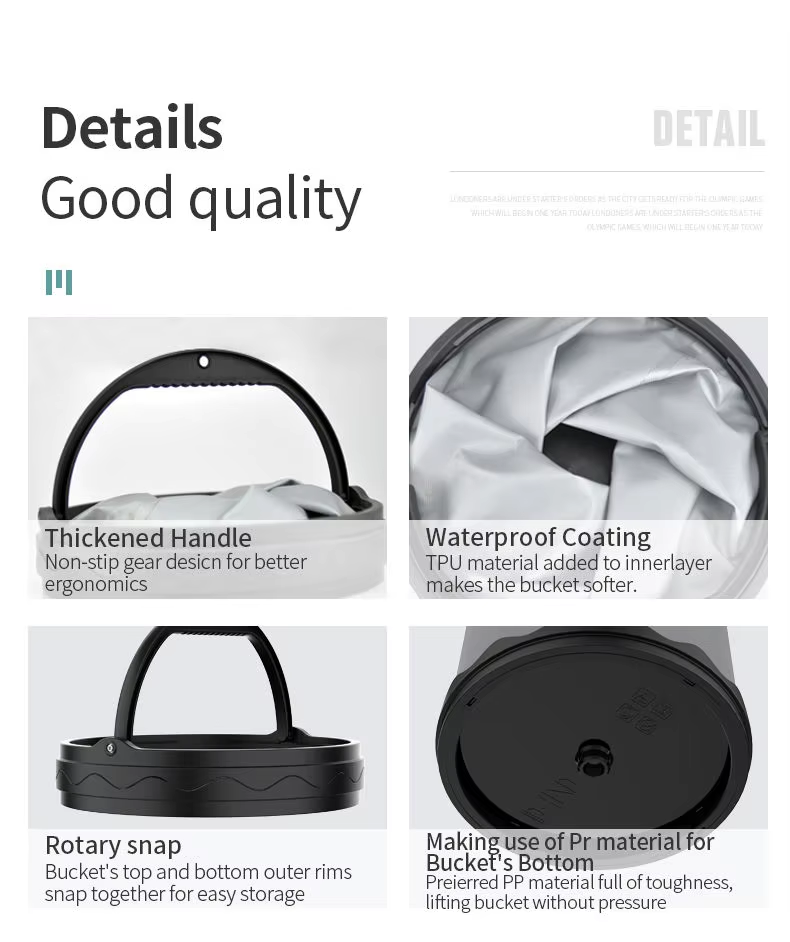
· Structural Stability and Anti-Topple Engineering: Inferior flexible buckets sag or tip over when filled. Premium manufacturing incorporates rigid top rims and reinforced base plates, ensuring a foldable water tank retains structural integrity when standing filled with 10 to 15 liters of water.
· Odorless, Non-Toxic Polymers: Older PVC buckets released strong plasticizers. Utilizing high-purity food-grade materials guarantees a completely odorless experience suitable for clean water supply.
· Seamless Cross-Category Bundling: Innovative buyers leverage a collapsible water bucket not only as a standalone SKU, but as an essential companion accessory for portable 3.7V electric showers, travel bidet sprayers, fishing gear kits, and pet grooming sets, driving up overall Average Order Value (AOV).
Maximizing B2B Growth through Smart Sourcing
Evaluating collapsible water buckets vs traditional rigid buckets reveals a clear commercial winner for modern supply chains. By shifting to flat-packable foldable water tank solutions, B2B procurement managers can dramatically shrink container freight expenses, optimize fulfillment warehousing, and deliver a versatile, space-saving product that modern consumers demand.
Partnering with an experienced manufacturer that maintains ISO 9001 quality standards alongside comprehensive FDA, LFGB, and RoHS testing guarantees that your private-label inventory remains compliant, reliable, and highly profitable in competitive global marketplaces.
Table of Contents
- The Freight and Logistics Dilemma of Traditional Rigid Buckets
- Freight Cost Reduction and Storage Efficiency with a Collapsible Water Bucket
- Sourcing Compliance: Essential Certifications for Global Markets
- Product Innovation: Overcoming Common Market Defects
- Maximizing B2B Growth through Smart Sourcing