All Categories

Get a Free Quote

Our representative will contact you soon.
Email
Name
Company Name
Message
0/1000

How Do Collapsible Buckets Compare to Traditional Rigid Buckets?

2026-03-19 08:00:00
How Do Collapsible Buckets Compare to Traditional Rigid Buckets?

When evaluating bucket options for outdoor activities, industrial applications, or general utility needs, the choice between collapsible buckets and traditional rigid buckets has become increasingly relevant. Modern collapsible buckets offer unique advantages that challenge the dominance of conventional rigid designs, particularly in scenarios where storage space, weight considerations, and portability are critical factors. Understanding the fundamental differences between these two bucket types helps determine which option best serves specific operational requirements and usage environments.

collapsible buckets

The comparison between collapsible buckets and traditional rigid buckets extends beyond simple functionality to encompass practical considerations such as durability, capacity retention, ease of cleaning, and long-term cost effectiveness. While rigid buckets have served as the standard for decades, collapsible alternatives now offer compelling benefits that make them suitable for applications ranging from camping and fishing to professional cleaning services and emergency preparedness. This comprehensive analysis examines the key performance differences, practical advantages, and potential limitations of each bucket type to guide informed decision-making.

Design and Construction Differences

Material Composition and Flexibility

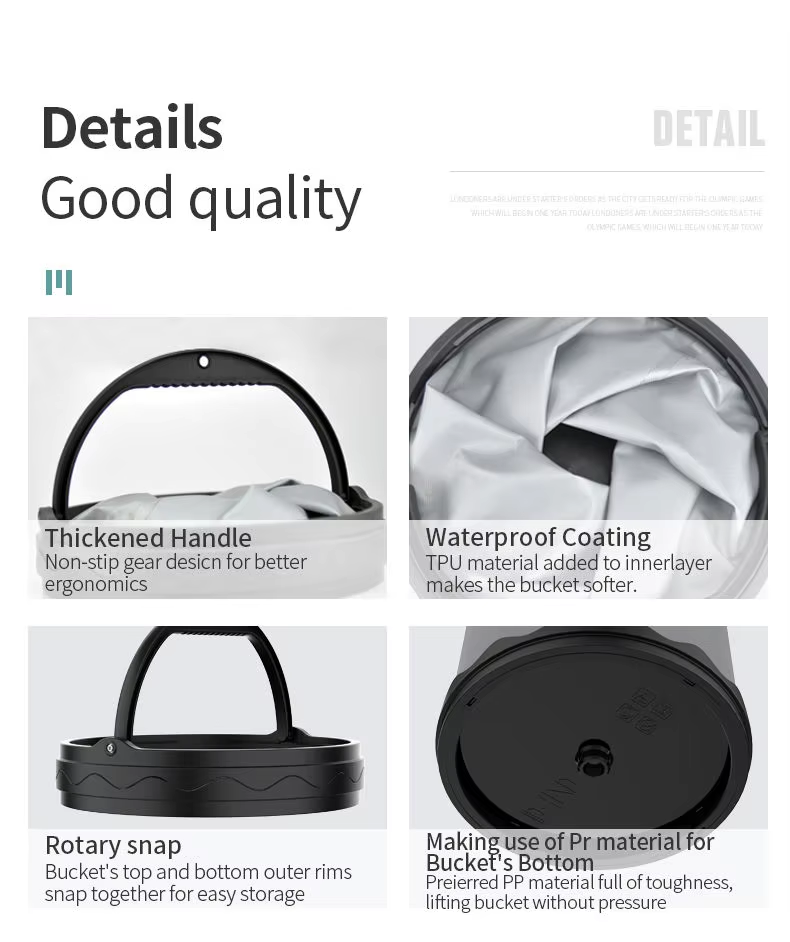
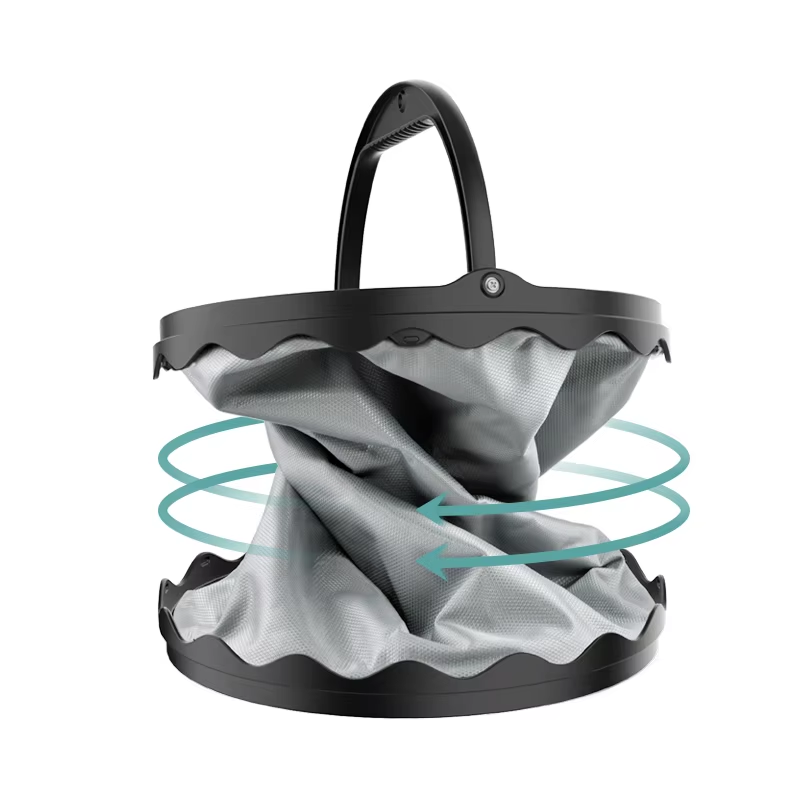
Collapsible buckets utilize flexible materials such as silicone, thermoplastic elastomers, or reinforced fabric with waterproof coatings, enabling them to fold flat or compress significantly when empty. These materials must maintain structural integrity while providing the flexibility necessary for collapse functionality. The construction typically involves accordion-style pleating or segmented walls that allow controlled compression without compromising the bucket's ability to hold water or other materials when expanded.

Traditional rigid buckets rely on solid materials like high-density polyethylene, polypropylene, metal, or fiberglass that maintain their shape regardless of contents or handling conditions. The rigid construction provides consistent structural support and eliminates concerns about wall collapse under load. However, this inflexibility means rigid buckets maintain their full volume footprint whether empty or full, impacting storage and transportation efficiency.

Structural Integrity and Load Distribution

The structural approach differs significantly between collapsible buckets and rigid alternatives in how they distribute weight and maintain shape under various load conditions. Collapsible designs often incorporate reinforced bottoms and rim structures to provide stability when filled, while the flexible walls adapt to contents and external pressure. This adaptive characteristic can be advantageous for irregular loads but may create unpredictable stress points under extreme conditions.

Rigid bucket construction distributes loads uniformly across fixed walls and bottom surfaces, providing predictable performance characteristics regardless of fill level or content type. The consistent geometry ensures stable stacking, reliable lifting points, and uniform stress distribution that professional applications often require. This structural predictability makes rigid buckets preferable for applications involving heavy loads, abrasive materials, or repetitive industrial use.

Storage and Portability Advantages

Space Efficiency When Not in Use

The primary advantage of collapsible buckets lies in their dramatic space reduction when empty, typically collapsing to less than 10% of their expanded volume. This space efficiency proves invaluable for applications where storage space is limited, such as recreational vehicles, boats, camping gear, emergency kits, or professional service vehicles where equipment storage optimization directly impacts operational efficiency.

Traditional rigid buckets maintain their full dimensional footprint regardless of use status, requiring dedicated storage space that accommodates their complete volume. While this consistent size can facilitate organization and stacking when multiple buckets are used, it becomes problematic in space-constrained environments. The inability to compress means rigid buckets often consume valuable storage real estate that could otherwise accommodate additional equipment or supplies.

Transportation Weight and Handling

Collapsible buckets typically weigh significantly less than rigid alternatives of comparable capacity due to thinner wall construction and lighter materials. This weight reduction becomes particularly noticeable when transporting multiple units or when weight restrictions apply, such as airline luggage limitations, backpacking scenarios, or vehicle payload considerations. The reduced weight also decreases user fatigue during extended carrying or repetitive handling operations.

The weight advantage of collapsible buckets extends to shipping and distribution costs for businesses purchasing buckets in quantity. Lower unit weights translate to reduced freight charges and easier inventory handling. However, the lighter construction that enables weight savings may also indicate reduced durability compared to heavier rigid alternatives, requiring careful evaluation of the trade-off between portability and longevity.

Durability and Longevity Comparison

Resistance to Physical Damage

Traditional rigid buckets demonstrate superior resistance to punctures, cuts, and impact damage due to their solid wall construction and thicker material profiles. The inflexible structure distributes impact forces across broader areas, reducing the likelihood of localized failure. Rigid buckets can withstand dropping, crushing forces, and contact with sharp objects better than their collapsible counterparts, making them more suitable for harsh industrial environments or applications involving abrasive materials.

Collapsible buckets face inherent vulnerability at fold lines, seams, and flexible wall sections where repeated stress concentration can lead to material fatigue and eventual failure. The thin, flexible materials necessary for collapse functionality offer less protection against sharp objects, rough handling, or extreme temperature variations. However, modern collapsible buckets incorporate reinforcement strategies such as thicker base materials, protected seam construction, and tear-resistant fabrics that significantly improve durability compared to early designs.

Maintenance and Cleaning Requirements

The smooth, non-porous surfaces of rigid buckets facilitate easy cleaning and sanitization, making them preferred for food service, medical applications, or situations requiring frequent washing. The consistent geometry allows thorough access to all interior surfaces, and rigid walls withstand aggressive cleaning methods including high-pressure washing, chemical sanitizers, and abrasive scrubbing without structural damage.

Collapsible buckets present cleaning challenges due to fold lines, seams, and textured surfaces that can trap debris and resist thorough sanitization. The flexible materials may absorb odors, stains, or chemicals over time, particularly when used with strong solvents or organic materials. However, many collapsible buckets feature smooth interior coatings and antimicrobial treatments that improve cleanability, though they may not match the hygienic standards achievable with rigid alternatives.

Performance in Different Applications

Capacity and Volume Retention

Rigid buckets maintain precise capacity measurements regardless of fill level, contents, or external conditions, providing consistent volume performance that professional applications often require. The inflexible walls ensure that rated capacity corresponds directly to actual usable volume, facilitating accurate measurement, mixing, and dispensing operations. This volume consistency proves critical in applications such as concrete mixing, chemical dilution, or food preparation where precise measurements affect final product quality.

Collapsible buckets may experience slight capacity variations due to wall flexibility and expansion characteristics under different load conditions. The soft walls can bow outward when filled with heavy materials or compress slightly under external pressure, affecting actual usable volume. While these variations are typically minimal for general applications, they can impact precision requirements in professional or technical uses where exact measurements are critical.

Specialized Use Case Performance

For outdoor recreation, emergency preparedness, and mobile applications, collapsible buckets excel due to their space-saving characteristics and adequate performance for water collection, washing, and general utility tasks. The portability factor often outweighs minor performance limitations, particularly when storage space or weight restrictions apply. Collapsible buckets prove ideal for camping, boating, emergency kits, and service applications where equipment transport efficiency directly impacts operational success.

Industrial applications, construction sites, and heavy-duty commercial uses typically favor rigid buckets for their durability, consistent performance, and ability to withstand harsh conditions. The predictable structural characteristics, superior load capacity, and resistance to damage make rigid buckets more cost-effective for applications involving frequent use, heavy materials, or exposure to extreme conditions. Professional cleaning services, construction crews, and manufacturing operations often find that rigid bucket longevity justifies the storage and transportation challenges.

Cost Analysis and Value Proposition

Initial Investment Considerations

Collapsible buckets typically command higher initial purchase prices compared to rigid alternatives of similar capacity due to specialized materials, complex manufacturing processes, and lower production volumes. The engineering required to create durable, flexible materials that maintain waterproof integrity while enabling collapse functionality increases manufacturing costs. However, the space-saving benefits may justify higher initial costs for applications where storage efficiency provides operational value.

Traditional rigid buckets benefit from established manufacturing processes, material economies of scale, and widespread availability that keep purchase prices relatively low. The simple injection molding or fabrication processes used for rigid construction enable cost-effective mass production. The lower initial cost makes rigid buckets attractive for applications requiring multiple units or where budget constraints limit equipment purchases.

Long-term Ownership Costs

The total cost of ownership comparison between collapsible buckets and rigid alternatives depends heavily on usage patterns, replacement frequency, and application requirements. Collapsible buckets may require more frequent replacement due to material fatigue, seam failure, or damage to flexible components, potentially increasing long-term costs despite space-saving benefits. However, applications that value portability and storage efficiency may find the operational benefits justify higher replacement costs.

Rigid buckets typically provide longer service life and lower replacement frequency, reducing total ownership costs over time. The durable construction and resistance to damage enable years of reliable service in appropriate applications. Professional users often find that rigid bucket longevity, combined with lower initial costs, provides superior value despite storage and transportation challenges.

FAQ

What is the typical lifespan difference between collapsible and rigid buckets?

Rigid buckets typically last 5-10 years or more with regular use due to their solid construction and resistance to wear. Collapsible buckets generally provide 2-5 years of service depending on usage frequency and handling conditions, as flexible materials and seam areas are more susceptible to fatigue and damage over time. However, light-duty recreational use can extend collapsible bucket life significantly.

Can collapsible buckets handle the same weight capacity as rigid buckets?

Most collapsible buckets can handle similar liquid capacities to rigid buckets of the same size, typically supporting 15-20 liters when properly expanded. However, the flexible walls may limit their ability to carry heavy solid materials or withstand the structural stress that rigid buckets can handle. Weight distribution and handling techniques become more important with collapsible designs to prevent wall collapse or seam stress.

Are there temperature limitations that affect the choice between collapsible and rigid buckets?

Collapsible buckets often have more restrictive temperature ranges due to flexible material properties, typically performing best between -10°C to 60°C. Rigid buckets generally withstand broader temperature extremes, with high-quality polyethylene buckets functioning from -40°C to 80°C. Extreme temperatures can affect the flexibility and durability of collapsible bucket materials, while rigid buckets maintain consistent performance across wider temperature ranges.

Which bucket type is better for professional cleaning and janitorial applications?

Professional cleaning applications typically benefit more from rigid buckets due to their durability, consistent capacity, ease of cleaning, and ability to withstand frequent use with chemicals and hot water. The smooth surfaces and structural integrity of rigid buckets facilitate thorough sanitization and resist damage from cleaning tools and aggressive chemicals. Collapsible buckets may serve specialized mobile cleaning applications where storage space is extremely limited, but rigid alternatives generally provide better long-term value for regular professional use.